


How to Ensure High Quality in Rotational Molded Products

Choosing the right rotational Mold Manufacturer is crucial for achieving quality. I learned that monitoring key quality indicators ensures product reliability. Additionally, I found that implementing robust testing methods helps maintain high standards throughout the production process.
Key Takeaways
- Choose the right rotational mold manufacturer to enhance product quality and reliability.
- Monitor key quality indicators like material integrity and dimensional accuracy to ensure high standards.
- Implement robust testing methods, including visual and mechanical testing, to identify defects early.
Key Quality Indicators in Rotational Mold
Material Integrity
Material integrityis crucial in Rotational Molding. I have seen that issues often arise frompoor bonding between polymers and natural fibers. This can lead to significant performance problems. For instance, when natural materials exceed 20 wt%, I noticed a marked decrease in material performance. To mitigate these issues, I recommend pre-treating fibers to reduce their hydrophilicity. This step can enhance the overall integrity of the molded product.
Different polymer materials also play a vital role in ensuring material integrity. Here’s a quick overview of some common polymers used in rotational molding:
| Polymer Material | Key Properties | Impact on Integrity |
|---|---|---|
| Polyethylene (PE) | Low to medium stiffness | Versatile applications |
| Linear Low Density Polyethylene (LLDPE) | Wide range of grades | Suitable for various applications |
| High Density Polyethylene (HDPE) | Higher rigidity, toughness | Ideal for performance-oriented products |
| Cross Linked Polyethylene (XLPE) | Enhanced impact resistance | Improved durability and strength |
| Polypropylene (PP) | Greater rigidity, heat resistance | Good for chemical resistance |
| Nylon (PA) | Full engineering performance | High performance in applications |
| Polycarbonate (PC) | High stiffness, flame retardant | Lower impact resistance |
| Plasticised Polyvinyl Chloride (PVC) | Excellent weathering | Highly resistant to chemicals |
Dimensional Accuracy
Dimensional accuracy is another key quality indicatorin Rotational Molded products. I learned that theindustry standard for products sized ≤1000mm is ±5mm. This tolerance is broader compared to other manufacturing methods. For complex designs, I often confirm tolerances with engineers to ensure accuracy.
Several factors influence dimensional accuracy, including mold design, material selection, and process control. Common tolerances can vary widely. Some manufacturers achieve tolerances as tight as ±0.5mm, while others may have limits around ±0.8mm. The typical shrinkage rate for rotational molded products is between 2.5% to 3%, which can affect achievable tolerances.
To maintain dimensional accuracy, I recommend using materials with lower shrinkage rates, such as linear low-density polyethylene (LLDPE). Strict process control, including regulated temperature and rotational speed, is essential. I have observed that common causes of dimensional inaccuracies include:
- Trapped air during the loading phase
- Insufficient material to fully coat the mold
- Improper heating leading to incomplete melting of the plastic powder
Surface Finish
The surface finish of rotational molded products significantly impacts their performance and durability. I have found that measuring surface finish parameters is essential. Common parameters include:
| Parameter | Description |
|---|---|
| Ra | Average roughness |
| Rv | Maximum depth of the profile |
| Rz | Maximum height of the profile |
I typically measure these parameters with a profilometer, reporting them in degrees of roughness. A smooth surface and consistent wall thickness lead to high-quality outputs and reduced reject rates. The consistency in product quality enhances downstream processes such as assembly, packaging, and distribution.
Selecting the right coatings can also reduce maintenance and extend mold life. This choice directly affects product performance and aesthetics. I have seen that permanent coatings are crucial for preparing molds for long-term use, influencing both the aesthetic and surface finish of the molded product.
Testing Methods for Rotational Molded Products
Testing methods play a vital role in ensuring the quality of rotational molded products. I have found that using a combination of visual inspection, mechanical testing, and non-destructive testing provides a comprehensive approach to quality assurance.
Visual Inspection
Visual inspection is often the first step in identifying defects in rotational molded products. I typically rely on various techniques to ensure thorough evaluations. Here’s a summary of effective visual inspection methods:
| Inspection Technique | Advantages | Limitations |
|---|---|---|
| Direct visual inspection | Flexible, no initial equipment cost, relies on inspector experience | Quality varies by inspector skill, difficult in low visibility areas |
| Inspection using industrial microscopes | Detects minute defects, can be paired with cameras for analysis | Stage size may limit sample fit, quality consistency depends on operator skill |
| Automated inspection using cameras | Minimizes human error, enhances quality, increases productivity | High initial equipment cost, requires maintenance |
| Inspection using borescopes | Nondestructive observation of hard-to-access areas, low maintenance cost | Requires careful selection for quality, may not be suitable for all inspection tasks |
I often find that direct visual inspection is effective for initial assessments. However, for more detailed evaluations, I prefer using industrial microscopes or automated systems. These methods help me catch defects that might otherwise go unnoticed.
Mechanical Testing
Mechanical testing is essential for assessing the performance characteristics of rotational molded products. I focus on several critical mechanical properties, which I test using specific methods. Here’s a breakdown of these properties and their corresponding testing methods:
| Mechanical Property | Testing Method |
|---|---|
| Viscoelastic properties | Dynamic Mechanical Analysis (DMA) |
| Cure kinetics | Dynamic Mechanical Analysis (DMA) |
| Elongational viscosity | Rotational Rheometry |
| Storage modulus (G′) | Dynamic Mechanical Analysis (DMA) |
| Loss modulus (G″) | Dynamic Mechanical Analysis (DMA) |
| Complex viscosity (η∗) | Dynamic Mechanical Analysis (DMA) |
| Equibiaxial elongational viscosity | Rotational Rheometry |
I have observed that Dynamic Mechanical Analysis (DMA) is particularly useful for evaluating viscoelastic properties. This method allows me to understand how materials behave under different conditions. It helps me ensure that the products meet the necessary performance standards.
Non-Destructive Testing
Non-destructive testing (NDT) methods are crucial for evaluating the integrity of rotational molded products without causing damage. I often use several NDT techniques to identify internal defects. Here are some common methods I rely on:
- X-ray testing
- Ultrasonic testing
- Magnetic particle testing
- Eddy current testing
- Penetration testing
Radiographic testing, which utilizes X-rays, helps me visualize internal features. This method is effective for identifying voids, inclusions, and cracks. I also find thermography useful for detecting surface and shallow subsurface defects, especially in complex shapes. Acoustic emission testing allows me to monitor crack formation in real time, providing early warnings of potential failures.
By employing these testing methods, I can ensure that the rotational molded products I work with meet high-quality standards. Each method contributes to a comprehensive understanding of product integrity and performance.
Quality Control Processes in Rotational Molding
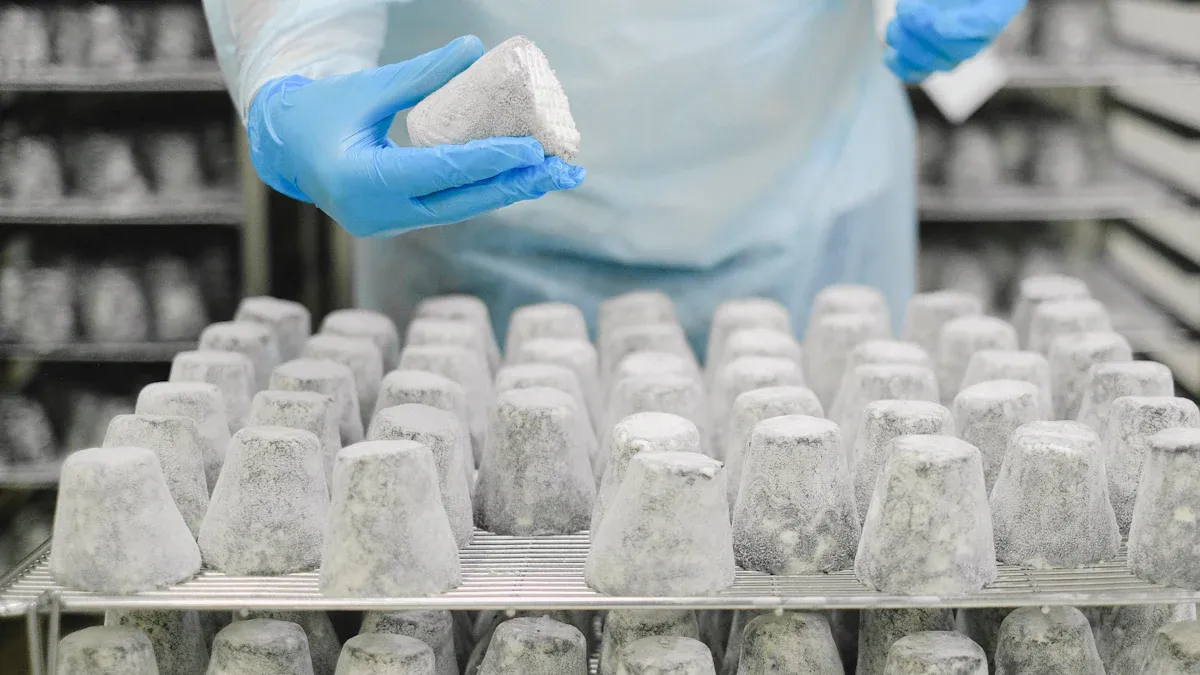
Quality control processes are essential in rotational molding. I focus on three main areas: monitoring during production, post-production checks, and documentation and reporting.
Monitoring During Production
I find that monitoring during production helps catch issues early. I use various technologies to ensure quality. For instance, infrared process monitoring allows me to maintain accurate temperature control. Additionally, I rely on wireless temperature monitoring systems. These systems provide real-time data, enhancing the quality of molded parts. They also help reduce energy usage and processing times.
Common issues I detect during monitoring include:
| Issue | Description | Solutions |
|---|---|---|
| Incomplete Fusion | Weak spots due to improper melting. | Ensure proper temperature control and use high-quality resins. |
| Warping | Deformation from uneven cooling. | Manage cooling rates and design molds with uniform thickness. |
| Pinholes and Voids | Small cavities affecting strength. | Degas materials and ensure proper venting. |
Post-Production Checks
After production, I conduct thorough inspections. Each item undergoes post-processing, which may include trimming or drilling. I ensure that every product meets specified standards. If I find defects, I correct them before packaging and shipping. This step is crucial for maintaining quality.
| Step | Description |
|---|---|
| Post-processing | Involves additional trimming or assembly based on product requirements. |
| Inspection | Each item is thoroughly inspected to ensure compliance with specified standards. |
| Defect correction | Any identified defects are corrected before packaging and shipping. |
Documentation and Reporting
I emphasize the importance of documentation and reporting in quality assurance. I follow industry standards like ISO 9001 and SPI 1998. These practices help ensure traceability and compliance. I maintain records of inspections and material certifications. This documentation supports quality control and provides valuable insights for future production.
| Quality Assurance Practice | Description |
|---|---|
| First Article Inspection (FAI) | A thorough examination of initial production samples. |
| ISO 9001 | International standard for Quality Management Systems. |
| Material Certificates | Documentation verifying the composition and quality of materials. |
By implementing these quality control processes, I can ensure that the rotational molded products I work with consistently meet high standards.
Best Practices for Quality Assurance in Rotational Molded Products
Staff Training
I believe that effective staff training is essential for maintaining high quality in rotational molded products. Training programs should cover several key aspects. Here’s a summary of important training areas:
| Training Aspect | Description |
|---|---|
| Safety | Training should include safety protocols to ensure a safe working environment. |
| Equipment Handling | Operators need to be trained on proper equipment handling to minimize errors and improve quality. |
| Continuous Improvement | Encouraging a culture of continuous improvement helps maintain high productivity and quality. |
| Regular Feedback | Providing timely feedback allows teams to quickly address issues and enhance work practices. |
I have seen that evolving training programs to be more inclusive and people-centric can significantly improve outcomes. Vitalii Potapenko's role in managing production and training emphasizes the importance of effective training in manufacturing.
Equipment Maintenance
Regular equipment maintenance is crucial for ensuring consistent quality in rotational molding. I focus on maintaining several key components:
| Equipment Component | Importance |
|---|---|
| Molds | Ensure product quality and consistency; designed for optimal heating and cooling efficiency. |
| Ovens | Maintain consistent temperatures for even melting of polymer powder; critical for uniform wall thickness. |
| Cooling Stations | Expedite cooling process to maintain part integrity; ensure consistent wall thickness during solidification. |
I have found that regular inspections prevent wear and tear by identifying issues early. Lubrication and cleaning also reduce friction and prevent impurities from causing damage, ensuring efficiency.
Supplier Quality Assurance
I recognize that strong supplier quality assurance measures significantly impact the overall quality of rotational molded products. Here are some effective measures:
| Measure | Description |
|---|---|
| Strong Supplier Relationships | Promotes proactive communication and fosters a sense of partnership, ensuring smooth production. |
| Quality Evaluation Practices | Evaluate suppliers on quality assurance practices like ISO certification and request samples for firsthand assessment. |
| Long-term Partnerships | Builds trust and cooperation, enhancing product quality and delivery timelines, leading to a resilient supply chain. |
| Dependable Suppliers | Offer competitive prices while adhering to industry standards, ensuring parts meet quality requirements. |
| Certifications | Checking certifications like ISO 9001 can indicate lower defect rates and higher customer satisfaction. |
By implementing these best practices, I can ensure that the rotational molded products I work with consistently meet high standards of quality.
Selecting the right rotational mold manufacturer is vital for product quality. I have learned that choosing a manufacturer who understands industry-specific needs leads to better products. Key quality indicators, such as material integrity and dimensional accuracy, along with robust testing methods, ensure high standards. Continuous quality control and best practices are essential for success.
- Remember:
- Quality in rotational molding is paramount.
- High-quality parts are necessary for optimal performance.
- Automation enhances production efficiency.
By focusing on these aspects, I can guarantee that my products withstand the test of time.
FAQ
What are the main factors affecting the quality of rotational molded products?
I focus on material integrity, dimensional accuracy, and surface finish as key factors that impact product quality.
How can I choose the right rotational mold manufacturer?
I recommend evaluating manufacturers based on their experience, capabilities, and compliance with industry-specific requirements to ensure quality.
What testing methods do you recommend for quality assurance?
I suggest using visual inspection, mechanical testing, and non-destructive testing to comprehensively assess the quality of rotational molded products.